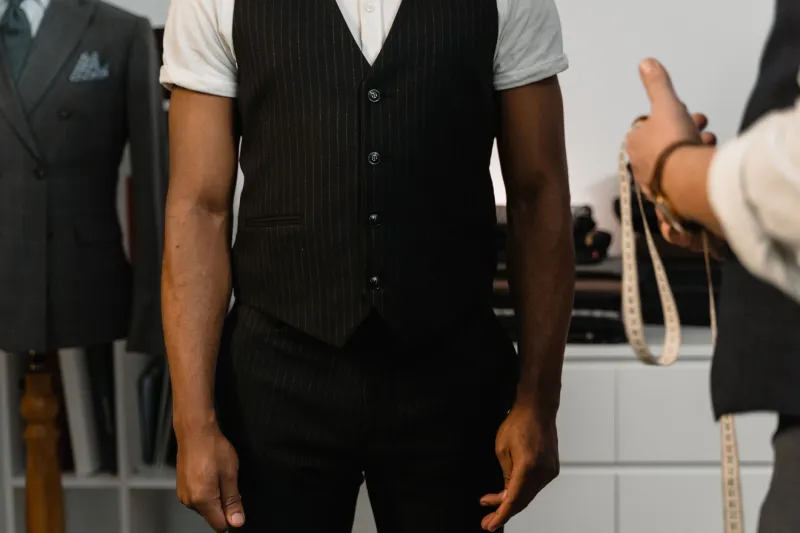
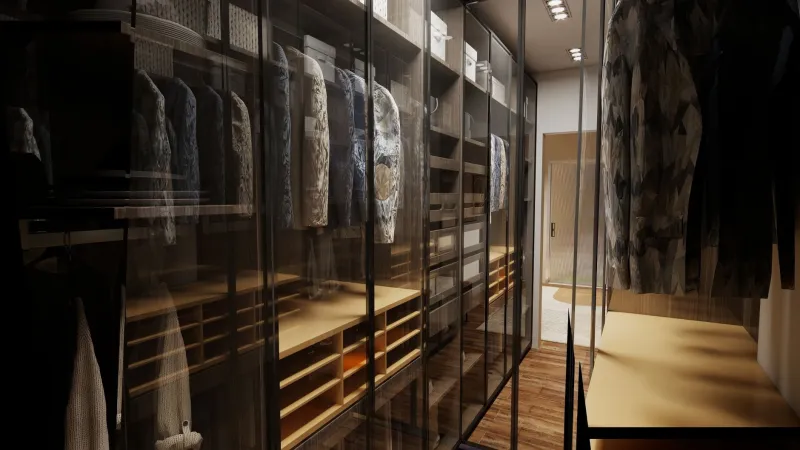
The Private Record: How Elite Collectors Document What the World Never Witnesses
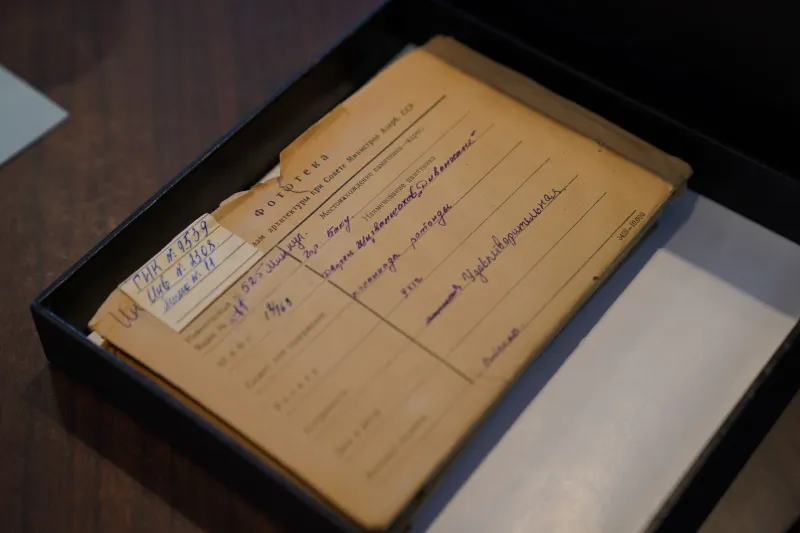
There is a particular kind of knowledge that separates the collector from the consumer. It is not simply the ability to identify a rare silhouette or recall the provenance of a single acquisition. It is something more intimate and more disciplined: the capacity to hold an entire collection in mind with precision—to know, at any given moment, the condition of a hem, the year a jacket entered the wardrobe, the name of the artisan who constructed it. This level of fluency does not happen by accident. It is the product of systematic, deliberate documentation.
Among the most serious collectors in the United States, personal archival practice has evolved into something that rivals the methodologies of institutional curators. What was once a simple list tucked into a drawer has become a sophisticated infrastructure of photography, condition assessment, provenance tracking, and custom database management. The collection, in their hands, is no longer a private indulgence. It is a living record.
The Limitations of Memory
Memory, however devoted, is an unreliable curator. A wardrobe assembled over decades—encompassing rare vintage acquisitions, bespoke commissions, limited-edition releases, and carefully sourced archive pieces—contains far more information than any individual can hold with accuracy. Condition changes subtly over time. Provenance details blur. The circumstances surrounding a significant acquisition fade with the years.
Sophisticated collectors recognize this vulnerability early. The impulse to document is not born of obsession but of respect—for the objects themselves, for the investment they represent, and for the legacy they may one day carry. A piece that cannot be described with authority is a piece whose value, whether financial or cultural, has already begun to erode.
Photography as a Foundational Practice
For many serious collectors, the documentation process begins with photography, and the standards they apply would not be out of place in a museum's conservation department. Each piece is photographed under consistent, controlled lighting—often against a neutral ground—from multiple angles: front, back, interior lining, construction details, labels, and any distinguishing marks. Close-up images capture stitching quality, hardware condition, and fabric texture in ways that written description alone cannot replicate.
Some collectors maintain a dedicated space within their homes specifically for this purpose: a small, well-lit studio where new acquisitions are photographed immediately upon arrival and where existing pieces are re-documented following any alteration, cleaning, or condition change. This photographic record functions simultaneously as an aesthetic archive and a practical reference—indispensable when consulting with conservators, insurers, or estate professionals.
The images themselves are stored with the same care applied to the garments. Redundant digital backups, organized by acquisition date and category, ensure that the visual record survives even in circumstances the collector cannot anticipate.
Custom Systems and the Language of Condition
Beyond photography, the most meticulous collectors have developed personal cataloging systems that borrow heavily from institutional practice. Each entry in a well-maintained collection database typically includes the maker and house, the season or year of production, the acquisition date and source, the purchase price and current estimated value, and a condition assessment using a standardized scale.
Condition grading, in particular, reflects a level of intellectual rigor that distinguishes the serious collector from the casual enthusiast. Rather than vague descriptors, experienced collectors apply precise language: noting whether a lining shows wear at the shoulders, whether a zipper pull has been replaced, whether a button is original to the garment. This granularity is not pedantry. It is the foundation of informed stewardship.
Custom spreadsheet systems serve many collectors well, but a growing number have turned to purpose-built collection management software—tools originally developed for fine art and antiquities—to accommodate wardrobes of significant scale and complexity. These platforms allow for advanced filtering, tagging, and cross-referencing, enabling a collector to locate, for instance, every piece in the archive by a specific atelier, or every item acquired within a particular five-year period.
The Insurance Dimension
Documentation carries consequences that extend well beyond personal satisfaction. For collections of meaningful financial value, a rigorous inventory is not optional—it is a professional obligation. American insurance carriers specializing in high-value personal property require detailed records to establish coverage levels and, in the event of loss, to substantiate claims.
Without documentation, the collector's position in any dispute is fundamentally weakened. A photograph, a receipt, a condition report, and a provenance note together constitute a far more defensible record than memory alone. Collectors who have worked with specialists in luxury personal property insurance consistently report that the quality of their documentation directly influences both their coverage options and their peace of mind.
Privacy as Principle
It is worth noting that the impulse to document does not conflict with the discretion that defines serious collecting—it reinforces it. The collector who maintains a thorough private record has no need to display or announce the contents of their wardrobe. The archive exists for their own reference, for their trusted advisors, and ultimately for the individuals who will inherit or steward the collection in years to come.
This privacy is, in many respects, the point. The Secret Collection ethos has always held that true luxury resides in what is known rather than what is shown. A perfectly documented wardrobe—intimate in its detail, invisible to the outside world—embodies precisely that principle. The collector knows what they own. They know its history, its condition, its worth. That knowledge is its own form of wealth.
Documentation as an Act of Authorship
There is a final dimension to personal archival practice that transcends the practical. When a collector documents their wardrobe with care and consistency, they are doing something more than managing an inventory. They are authoring a record of their own aesthetic intelligence—a chronicle of the decisions, the discoveries, and the standards that shaped a collection over time.
Future generations, whether family members or cultural institutions, will inherit not only the objects but the story embedded in their documentation. The condition reports and provenance notes and photographic records together constitute a kind of autobiography—one written not in words but in the language of objects and the discipline of their keeping.
For the collector who approaches their wardrobe with genuine seriousness, this is perhaps the most compelling argument for documentation of all. The collection, properly recorded, does not merely outlast its owner. It speaks for them.