When Fashion Meets Fine Art: The Collector's Approach to Building a Signature Aesthetic
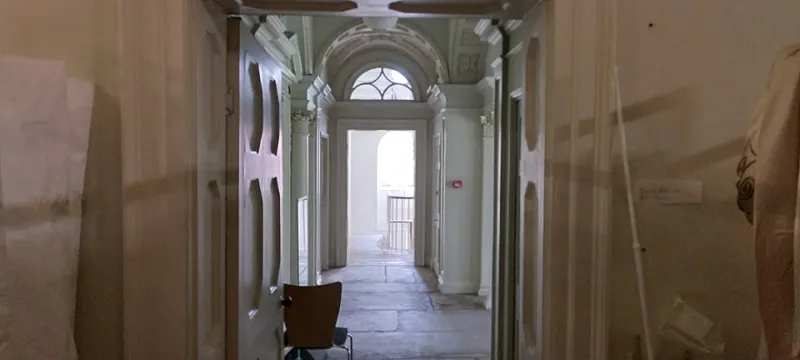
Photo: Ridiculopathy, CC0, via Wikimedia Commons
There is a particular kind of confidence that radiates from individuals who have mastered the art of dressing — not by following the dictates of any single season, but by cultivating a visual language entirely their own. Walk through the permanent collections at the Metropolitan Museum of Art or the Art Institute of Chicago, and you will observe something instructive: the curators who assembled those galleries were not chasing novelty. They were pursuing coherence, depth, and meaning. The most discerning fashion collectors apply precisely this discipline to their wardrobes.
At Secret Collection, we believe that style at its highest expression is not a product of consumption — it is a product of curation. And curation, in its truest form, is an act of scholarship.
Composition: The Architecture of an Outfit
In fine art, composition refers to the deliberate arrangement of visual elements within a frame — the balance of mass and negative space, the relationship between foreground and background, the deliberate tension or harmony between forms. A master painter does not place figures arbitrarily; every element serves the whole.
The sophisticated dresser thinks in precisely these terms. An outfit is a composition. The proportions of a wide-leg trouser against a cropped jacket create visual tension in the same way a Caravaggio painting employs chiaroscuro — light and shadow working in dramatic opposition to produce something more compelling than either element alone. A single, architectural accessory placed against an otherwise unadorned ensemble functions as a focal point, much like the solitary figure in a vast Hopper landscape.
To develop this sensibility, begin by studying your wardrobe as a collection of forms rather than a catalogue of items. Ask not merely whether a piece is beautiful in isolation, but how it behaves in relation to others. Does it anchor or overwhelm? Does it create proportion or distort it? These are the questions a curator poses before committing to an acquisition.
Color Theory: The Palette as Personal Signature
Every significant artist works within a recognizable palette — the dusty ochres and deep umbers of Rembrandt, the electric blues and acid yellows of Matisse. That palette is not accidental; it is the result of years of refinement, of understanding how colors interact, how they carry emotional weight, and how they define a body of work.
The most memorable dressers in American cultural history have understood this intuitively. They return, season after season, to a core chromatic vocabulary that becomes inseparable from their identity. This is not monotony — it is mastery.
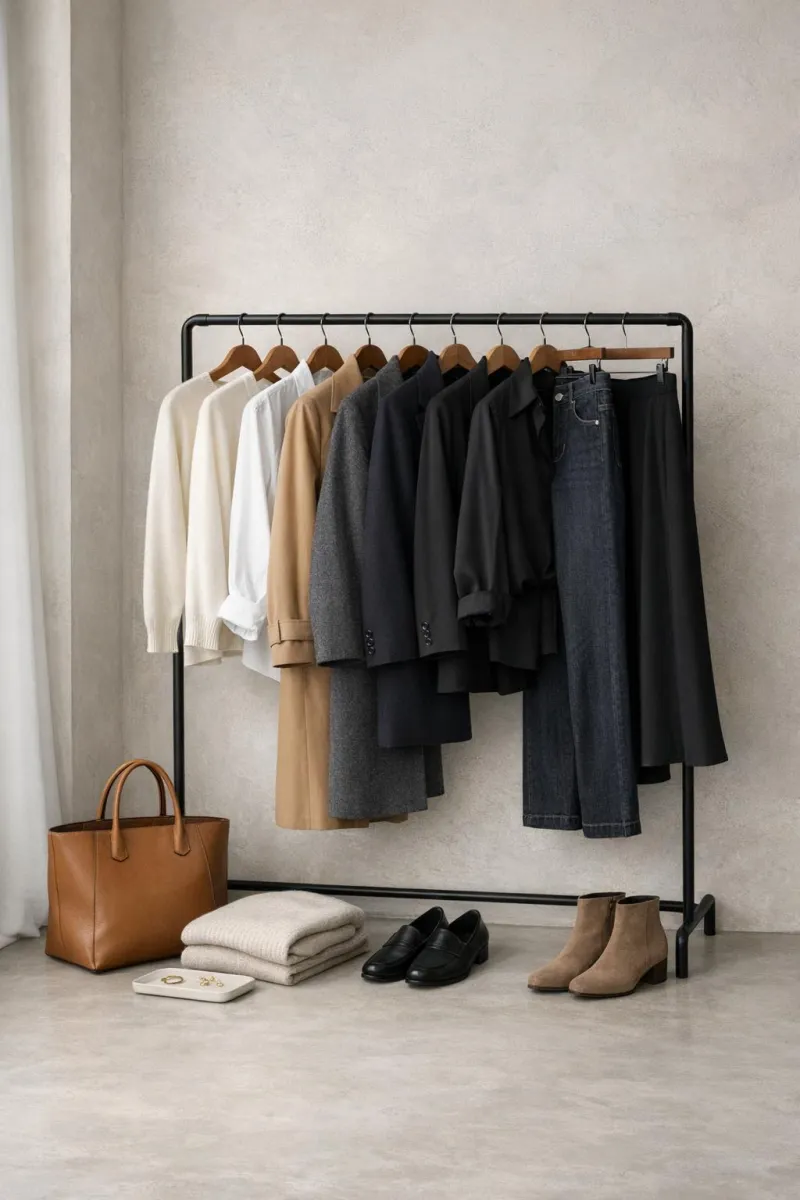
Color theory offers a rigorous framework for this kind of wardrobe building. Understanding the difference between analogous harmonies (colors adjacent on the wheel, producing a serene, cohesive effect) and complementary contrasts (opposing hues that generate visual energy) allows a collector to construct outfits with intention rather than guesswork. The neutral wardrobe, so often misread as safe or uninspired, is in fact a sophisticated exercise in tonal relationships — the difference between ivory, cream, and bone is as consequential as the difference between a Monet and a Pissarro.
When investing in new pieces, consider how each addition speaks to your existing palette. A wardrobe built on considered chromatic restraint will always feel more coherent — and more luxurious — than one assembled from seasonal impulses.
Provenance: The Story Behind the Object
In the art world, provenance is everything. The documented history of an object — who created it, who owned it, how it traveled through time — is inseparable from its value and meaning. A painting without provenance is merely a picture. A painting with a rich, authenticated history is a cultural artifact.
Luxury fashion, at its finest, operates on the same principle. A coat cut by a master tailor in a centuries-old Milanese atelier carries with it a lineage of craft. A handbag produced in a family-owned workshop in the American Southwest carries the story of a tradition. These are not merely objects; they are arguments about how things ought to be made.
The collector who understands provenance shops differently. Rather than asking "Is this beautiful?" or even "Is this well-made?" — though both questions matter — they ask: "What is the story of this object, and does that story align with the narrative I am building?" A wardrobe assembled with this question in mind becomes something more than clothing. It becomes a collection with integrity.
The Museum Mindset Applied to Acquisition
Museums do not acquire indiscriminately. Before any significant purchase, curators consider the existing collection, identify gaps, and evaluate whether a prospective addition strengthens or dilutes what is already there. This acquisitions philosophy is one the fashion collector would do well to adopt.
Before adding any piece to a considered wardrobe, ask three questions. First: does this reinforce the aesthetic identity I have already established, or does it represent a departure I cannot fully justify? Second: is this piece of sufficient quality to endure — not merely in terms of construction, but in terms of design longevity? Third: does it serve a genuine function within the collection, or am I responding to external pressure — a trend, a sale, a moment of social influence?
The answers to these questions will eliminate the vast majority of potential acquisitions. What remains will be worth having.
Style as a Living Collection
A museum collection is never truly finished. It evolves as new works are acquired, as understanding deepens, as the cultural context shifts. A wardrobe built on curatorial principles operates the same way — it is not a fixed archive but a living expression of an evolving aesthetic intelligence.
This is, perhaps, the most liberating insight the art world offers the fashion collector: that refinement is a process, not a destination. The goal is not to arrive at a perfect wardrobe but to develop the eye that makes every choice more considered than the last.
At Secret Collection, every piece we offer has been selected with this philosophy in mind — not as a trend report, but as a contribution to a collection. The question we ask of every acquisition is the same one we invite our clientele to ask of theirs: does this belong here, and will it still belong here twenty years from now?
The answer, when the eye has been properly trained, is never in doubt.