The Discipline of Desire: How Selective Restraint Defines the Modern Luxury Collector

Photo: simpleinsomnia, CC BY 2.0, via Wikimedia Commons
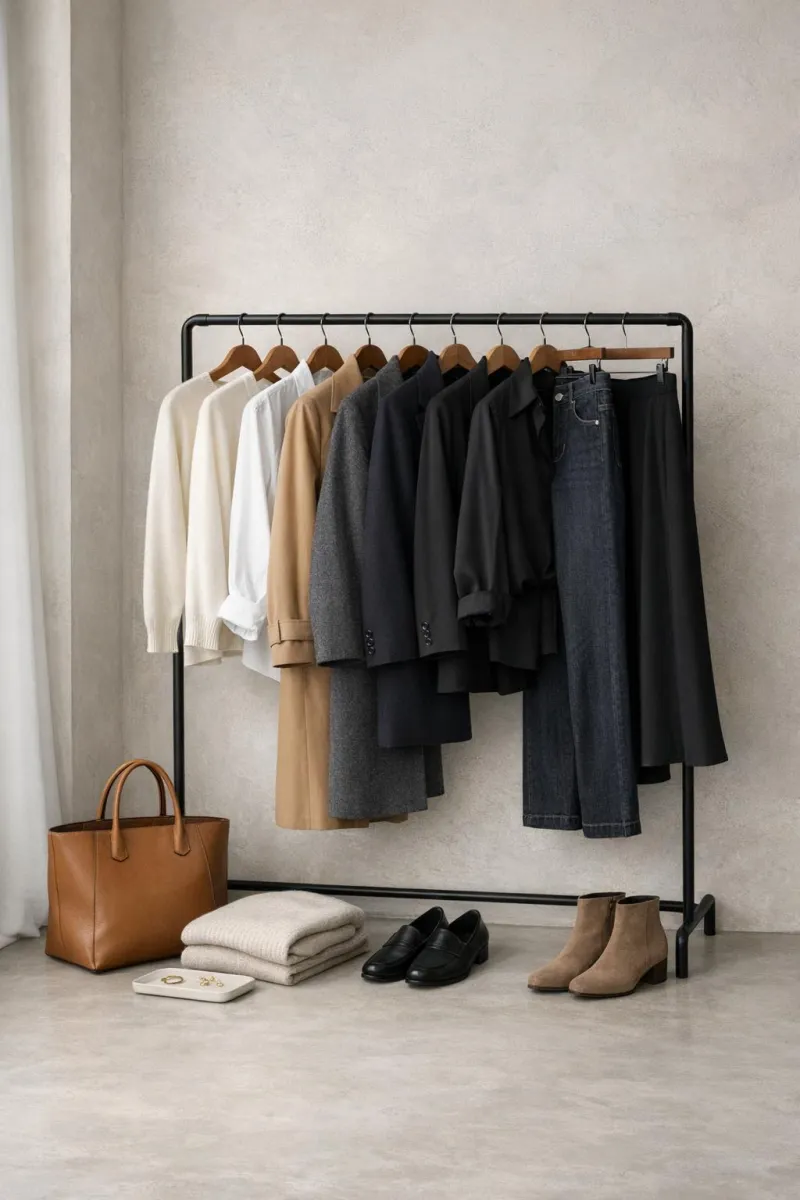
There is a particular kind of confidence that announces itself not through abundance, but through absence. Walk into the dressing room of a truly sophisticated collector—someone whose wardrobe has been assembled over years with quiet deliberation—and you will notice, almost immediately, what is not there. No impulse purchases in awkward colorways. No capsule collections acquired simply because a storied house released them. No pieces held hostage by the memory of a fleeting trend cycle. What remains is something rarer than any single garment: a point of view.
This is the essence of what luxury consultants and personal stylists across the country are beginning to call strategic restraint—a philosophy that positions selective rejection not as deprivation, but as the highest form of curation.
The Psychology of the Curated No
For decades, the aspirational narrative around luxury fashion was fundamentally additive. More meant better. A fuller closet signaled greater access, greater taste, greater status. But that story is shifting, and the shift is being driven not by minimalism as an aesthetic trend, but by something deeper: a growing sophistication among collectors who understand that true discernment requires the courage to decline.
"My most successful clients are the ones who come to me already knowing what they don't want," says one New York-based luxury wardrobe consultant who works exclusively with private clients in the financial and creative industries. "They've done the interior work. They understand their silhouette, their lifestyle, their actual relationship with clothing—and that clarity makes every acquisition meaningful rather than reflexive."
Psychologists who study consumer behavior have long noted that the act of choosing is inseparable from the act of refusing. Every selection implies a rejection. But what distinguishes the strategic collector is that the refusal is conscious—it is made with the same intentionality as the purchase itself. The result is a wardrobe that functions as a genuine self-portrait rather than a catalog of passing enthusiasms.
When Oversaturation Becomes the Enemy of Elegance
The luxury market has never been more crowded. Collaborations, limited drops, celebrity lines, and social media-driven micro-trends have created an environment in which novelty is manufactured at industrial scale. For the discerning collector, this proliferation presents a specific kind of challenge: how does one identify genuine quality and authentic design language when the market is flooded with items engineered to appear exclusive?
The answer, increasingly, lies in the willingness to step back entirely from the noise. Several prominent personal stylists note that their most affluent clients have begun instituting personal moratoriums—periods during which they make no new acquisitions at all, using the pause to audit what they already own and to clarify what, if anything, is genuinely missing.
"Luxury used to mean access," observes a Los Angeles-based stylist whose clientele includes figures from the entertainment and technology sectors. "Now, for people who can genuinely acquire anything, luxury means not being moved by everything. The ability to walk past something beautiful and feel nothing—because it doesn't align with who you are—that's a form of mastery."
This shift has practical implications as well as philosophical ones. Pieces acquired through strategic restraint tend to be worn more frequently, cared for more attentively, and held for longer periods. The emotional investment that accompanies a truly considered purchase generates a relationship with an object that impulse buying simply cannot replicate.
Identifying Your Sartorial North Star
The work of strategic restraint begins long before entering a boutique or browsing a curated collection. It begins with the harder, quieter work of self-knowledge—understanding not only what you find beautiful in the abstract, but what actually serves the life you are living and the person you are becoming.
Luxury consultants who specialize in this kind of wardrobe philosophy often begin client engagements not with shopping, but with what one practitioner describes as a "values audit." Clients are asked to articulate their daily environments, their professional contexts, the occasions that matter most to them, and the aesthetic traditions that genuinely move them. Only from that foundation does the process of acquisition—and, crucially, rejection—become truly coherent.
The goal is to identify what stylists sometimes call a sartorial north star: a consistent aesthetic identity that can serve as a reliable compass when navigating an overwhelming marketplace. With that north star established, the decision to decline a beautiful but misaligned piece becomes not a sacrifice, but an affirmation.
Restraint as a Form of Respect
There is another dimension to this philosophy that is worth considering—one that speaks to the relationship between collector and maker. When a garment or accessory is acquired with full deliberation, it is received with the attention it deserves. The craftsmanship is noticed. The provenance is understood. The story is honored.
In contrast, pieces accumulated through reactive purchasing often disappear into the back of a closet, their quality unappreciated, their makers' intentions unrealized. Strategic restraint, in this sense, is not only a form of self-discipline—it is a form of respect for the artisans and designers whose work merits a discerning audience.
At Secret Collection, this philosophy informs every aspect of how we approach curation. Our collection is not assembled to be comprehensive. It is assembled to be right—right in its standards, right in its provenance, and right for the client who has already done the work of knowing themselves well enough to recognize what belongs in their life.
The Rarest Luxury of All
In an era defined by instant access and algorithmic suggestion, the capacity to pause, to reflect, and to decline is genuinely uncommon. It requires a kind of interior stillness that the contemporary marketplace is not designed to encourage. But for those willing to cultivate it, the rewards are considerable.
A wardrobe built on strategic restraint does not merely look different from one assembled through acquisition for its own sake. It feels different—to the person who wears it and to everyone who encounters it. It carries the quiet authority of genuine conviction. And in the world of luxury, where so much is engineered to simulate exclusivity, that authority is perhaps the rarest thing of all.
The art of saying no, it turns out, is also the art of saying something true about who you are.