Collecting with Intention: The Investment Mindset Behind Wardrobes That Gain Value
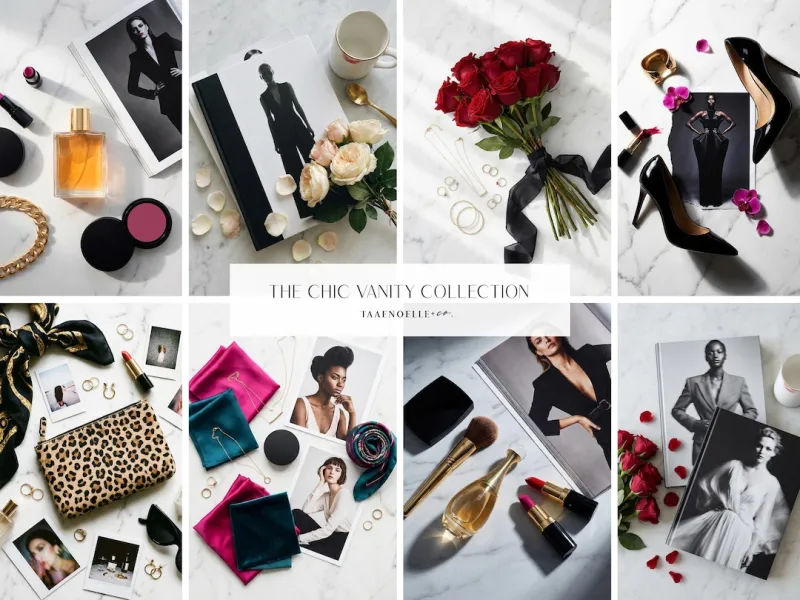
Photo: luxury fashion collection curated wardrobe accessories editorial flatlay, via i.etsystatic.com
There is a meaningful distinction between someone who buys luxury goods and someone who collects them. The former seeks pleasure in the moment of acquisition; the latter thinks in decades, in provenance, in the slow accumulation of pieces that tell a coherent story — and, not incidentally, hold or grow their worth over time. At Secret Collection, we have long believed that a truly curated wardrobe is not assembled in a season. It is built with the patience and discernment more commonly associated with fine art than fashion.
The investment mindset behind serious luxury collecting is, at its core, a philosophy of restraint married to deep knowledge. Understanding how to practice it requires examining what separates a piece with lasting value from one that simply reflects the mood of a particular moment.
The Difference Between Trend and Talisman
Every season, fashion houses produce extraordinary work. Not all of it will matter in twenty years. The collectors who consistently build appreciating wardrobes have learned to ask a simple but demanding question: Is this piece responding to a cultural moment, or is it defining one?
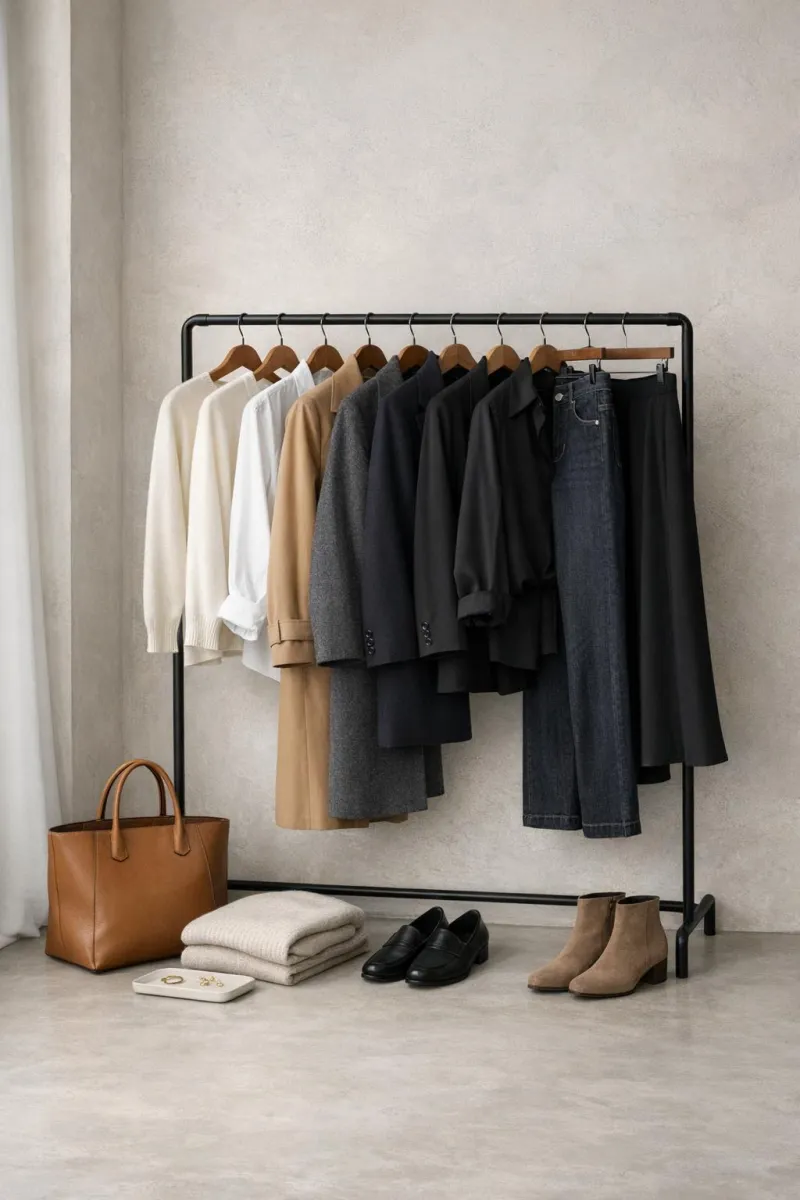
Timeless pieces tend to share certain qualities — exceptional craftsmanship, materials sourced with unusual care, and a design logic that feels resolved rather than reactive. A structured bag from a heritage atelier constructed with hand-stitched saddle leather will outlast a logo-heavy accessory that peaked during a particular cultural trend. Similarly, a tailored coat cut with architectural precision carries forward across decades in a way that a novelty item simply cannot.
Fashion advisors who work with serious collectors frequently counsel their clients to resist the gravitational pull of seasonal marketing. "The runway is theater," one New York-based wardrobe curator observed during a private consultation documented for this piece. "What matters is what survives the theater — the pieces that feel inevitable rather than timely."
Provenance and the Story Objects Carry
In the fine art world, provenance — the documented history of an object's ownership and origin — significantly affects value. Luxury collecting operates by similar principles, though the mechanisms are less formalized. A garment worn by a cultural figure at a defining moment, a limited edition produced in collaboration between two iconic houses, or an early piece by a designer who later achieved canonical status: each carries a narrative weight that compounds over time.
Savvy collectors maintain meticulous records. Original receipts, authenticity certificates, branded packaging, and even correspondence with the house or boutique of purchase all contribute to an object's story. In the secondary luxury market — which platforms like 1stDibs and The RealReal have made newly transparent — documented provenance consistently commands a premium. Condition matters enormously, of course, but the story behind a piece is what elevates it from resale to collectible.
Identifying Emerging Value Before the Market Does
Perhaps the most coveted skill among luxury collectors is the ability to recognize significance before it becomes consensus. This requires a kind of cultural fluency — an attentiveness to the conversations happening at the edges of the industry rather than at its center.
Some practical strategies are worth noting. Following independent fashion critics and scholars, rather than relying solely on mainstream media, often surfaces emerging designers earlier. Attending smaller trade events and trunk shows in cities like Los Angeles, Chicago, and New York — rather than restricting one's attention to the major fashion weeks — provides exposure to talent operating outside the spotlight. Cultivating genuine relationships with boutique owners and buyers, the kinds of relationships that result in a quiet phone call when something significant arrives, is perhaps the most reliable intelligence network available to a serious collector.
Limited editions deserve particular attention. When a house produces a run of fifty or a hundred pieces — whether a specific colorway of an iconic silhouette, a collaboration with an artist of note, or a revival of an archival design — the mathematics of scarcity begin working in the collector's favor immediately. The challenge lies in distinguishing genuine rarity from manufactured hype. Genuine rarity is rooted in production constraints and intentional exclusivity; manufactured hype is rooted in marketing. The former appreciates; the latter deflates.
Building a Collection with Internal Logic
The most admired private collections share a quality that is difficult to quantify but immediately recognizable: coherence. Each piece relates to the others, not necessarily in a literal or matching sense, but in terms of the values and aesthetic commitments they express. A collection assembled without internal logic — however individually impressive its components — reads as accumulation rather than curation.
Defining one's own collecting parameters is an early and essential step. Some collectors organize around a single house, acquiring across decades of its archive to trace the evolution of a design language. Others focus on a specific category — footwear, leather goods, tailoring — and develop extraordinary depth within it. Still others collect across houses but within a consistent material vocabulary, gravitating always toward natural fibers, handcraft, and restrained color.
What matters less is the specific organizing principle than the fact of having one. A collection with a clear point of view communicates something meaningful about its steward — and in the world of serious luxury, that communication is itself a form of distinction.
Patience as the Ultimate Luxury
In an era defined by immediacy, the willingness to wait is genuinely rare. Serious collectors understand that the most valuable pieces often require time — time to locate, time to afford, time to understand fully before committing. Waitlists at the great European houses are not merely obstacles; they are invitations to consider whether one's desire for a piece is genuine or merely reactive.
At Secret Collection, we return always to the conviction that true luxury is never hurried. The wardrobe built with intention — one piece at a time, each chosen for its capacity to endure — is ultimately the most personal and the most valuable kind. It is not a collection of things. It is a record of discernment.