Dressed for Generations: How America's Most Discerning Families Are Treating Fashion as a Family Legacy
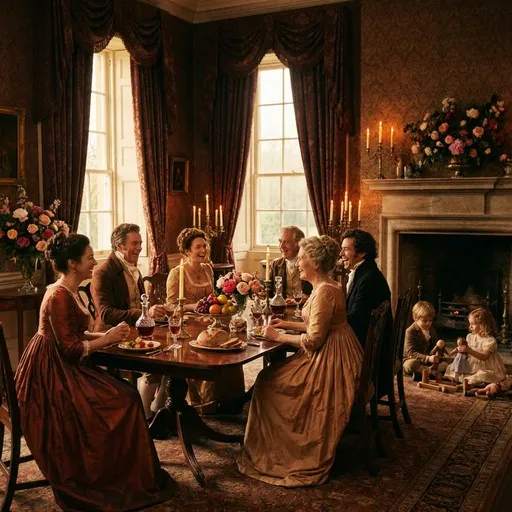
Photo: multigenerational luxury family heirloom fashion accessories estate elegant, via images.stockcake.com
In the parlors and private estates of America's most established families, a conversation is quietly gaining momentum — one that has less to do with what to wear this season and everything to do with what to pass down to the next generation. Jewelry has always occupied a place in the estate plan. Art, real estate, and rare wine have long been understood as transferable wealth. But fashion and accessories? That, for most of the twentieth century, was considered a different category entirely: personal, perishable, and ultimately disposable.
That assumption is changing.
Across the country, a growing cohort of ultra-high-net-worth families is reconsidering the relationship between luxury goods and long-term legacy. The shift is not merely sentimental. It is strategic, informed by a convergence of factors — rising craftsmanship standards among heritage brands, a secondary market for luxury goods that has demonstrated remarkable resilience, and a broader cultural reckoning with the costs of disposability.
The Heirloom Mentality Returns
For much of American history, the concept of the heirloom wardrobe was not unusual. A well-made coat was expected to last decades. A pair of custom-fitted shoes, resoled and reconditioned, could accompany a man through an entire professional life and beyond. The notion of clothing as something to be discarded after a season would have struck most mid-century Americans of means as not merely wasteful but philosophically incoherent.
The postwar democratization of fashion — and the acceleration of trend cycles that followed — disrupted this sensibility profoundly. By the early 2000s, even luxury consumers had internalized a disposability logic that had little to do with the quality of the objects they were purchasing.
What is emerging now is not nostalgia so much as recalibration. Families who have built and preserved significant wealth across multiple generations are applying to fashion the same long-term thinking they bring to their financial portfolios and art collections. The question is no longer simply "Is this beautiful?" but "Will this still be meaningful in forty years, and to whom?"
What Estate Planners Are Seeing
Several estate planning professionals who advise ultra-high-net-worth clients report that conversations about personal property — historically dominated by jewelry and art — now regularly include structured luxury fashion collections.
"We are seeing clients approach certain acquisitions with the same documentation discipline they would apply to a fine art purchase," notes one New York-based estate attorney who works with multigenerational family offices. "Provenance records, authentication certificates, condition reports — these are becoming standard practice for significant fashion and accessory acquisitions, particularly among clients who are thinking beyond their own lifetimes."
This documentation-forward approach reflects a deeper shift in how luxury goods are valued. The secondary market for heritage handbags, bespoke tailoring, and limited-production accessories has matured considerably over the past decade, with certain categories consistently outperforming broader market indices. Families who understand this are not simply purchasing for personal enjoyment — they are curating with intention.
The Brands That Understand Legacy
Not every luxury brand is built for this kind of longevity. The multi-generational collector is a discerning buyer, and their criteria diverge sharply from those of the trend-driven consumer.
Heritage brands — those with documented histories of exceptional craftsmanship, consistent design language, and robust repair and restoration programs — command particular attention in this context. A house that has been producing goods by hand for over a century, using techniques refined across generations of artisans, offers something that no amount of marketing can manufacture: the credibility of time.
American families building legacy collections are increasingly seeking out brands and independent makers who can speak to the longevity of their materials and methods. They are asking pointed questions: What is the expected lifespan of this piece with proper care? Does the brand offer restoration services? Are replacement materials and hardware available decades hence? These are not the questions of a seasonal shopper. They are the questions of a custodian.
"The clients who are most serious about this approach treat each acquisition as a stewardship decision," observes a luxury brand heritage consultant based in Los Angeles who advises both private collectors and established houses on long-term positioning. "They are not buying for themselves alone. They are buying on behalf of the family."
Designing for Longevity: What to Look For
For families beginning to think about fashion in multi-generational terms, the criteria for acquisition shift meaningfully. Trend relevance becomes largely irrelevant. Construction quality, material integrity, and design classicism move to the foreground.
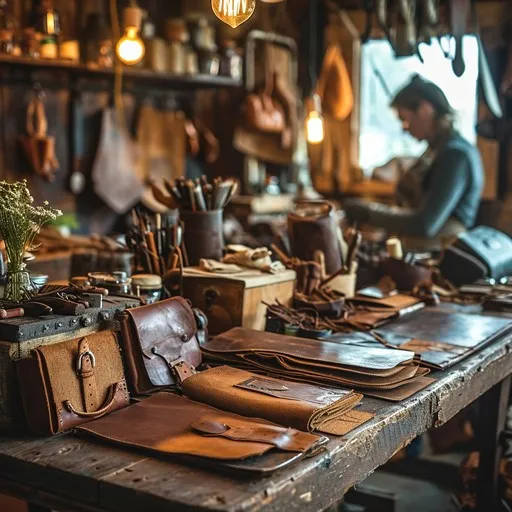
Leather goods crafted from full-grain hides using traditional hand-stitching techniques will outlast machine-made alternatives by decades, provided they receive appropriate care. Tailored garments cut from high-twist wool or substantial cashmere, constructed with full canvas rather than fused interlinings, retain their structure and beauty across years of wear and careful storage. Footwear made on traditional lasts, with leather soles designed to be resoled repeatedly, can genuinely accompany an owner — and eventually an heir — across a lifetime.
The Secret Collection philosophy has always held that true luxury is not defined by price alone but by the relationship between an object and time. A piece that grows more beautiful, more storied, and more meaningful with each passing year is not merely an acquisition — it is an argument for a different way of living.
The Conversation Families Are Having
Perhaps the most significant dimension of this trend is not financial but relational. Families who approach their collections with generational intent are, by necessity, having conversations about values, taste, and identity that transcend the transactional.
Deciding which pieces to preserve, which to pass to which family members, and how to document the stories attached to significant objects is an act of cultural transmission. A grandmother's bespoke coat, worn to a particular occasion and preserved with care, carries with it a history that no new purchase can replicate. The decision to invest in pieces worthy of that kind of continuity is, at its core, a decision about what kind of family one intends to be.
America's most discerning families understand this. They are not simply building wardrobes. They are building collections — and in doing so, they are building something that will endure long after any single season has been forgotten.
At Secret Collection, we curate with precisely this horizon in mind. Every piece we offer is selected not merely for its beauty in the present moment, but for its capacity to carry meaning forward — into the next decade, the next generation, and beyond.