By Appointment Only: How Private Shopping Is Redefining American Luxury
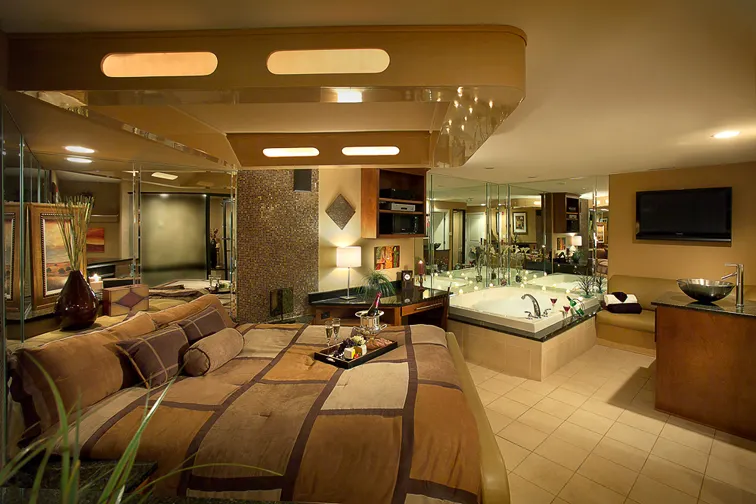
Photo: DiscoverDuPage, CC BY 2.0, via Wikimedia Commons
The address is not listed anywhere easily found. There is no storefront signage, no window display, no foot traffic. You arrive because someone who knew someone extended an invitation, or because a style concierge whose number is not publicly available made a call on your behalf. Inside, champagne has been poured. Your measurements are already on file. The pieces laid out for your consideration were selected with knowledge of your previous acquisitions, your travel schedule, and the particular occasion for which you are dressing.
This is not a scene from a European fashion novel. It is an increasingly common reality in cities from Manhattan to Miami, from Beverly Hills to Chicago's Gold Coast — and it represents one of the most significant shifts in the architecture of American luxury retail in a generation.
The Retreat from the Retail Floor
For much of the twentieth century, the luxury retail experience was defined by grandeur. Flagship stores on Fifth Avenue and Rodeo Drive served as cathedrals of aspiration, their soaring interiors and impeccably dressed staff designed to communicate prestige through spectacle. The experience of shopping at a great luxury house was itself a kind of performance, and for many consumers, that performance was part of the appeal.
That model has not disappeared — but among the highest tier of affluent American consumers, its appeal has diminished considerably. Several forces are driving this evolution.
Privacy, for one, has become a scarce and therefore precious commodity. For individuals whose net worth places them in the public eye, or who simply value discretion as a matter of personal philosophy, the prospect of browsing alongside other shoppers — and potentially being observed, photographed, or recognized — has made traditional retail environments increasingly unappealing.
Time scarcity is another factor. The clientele that luxury brands most covet are frequently among the most time-constrained people in the country. Executives, entrepreneurs, and high-profile professionals do not browse. They acquire. An experience that respects their time — that comes pre-edited, pre-curated, and conducted on their schedule — is worth a considerable premium.
Finally, there is the matter of meaning. As luxury goods have become more widely accessible through diffusion lines, secondary markets, and international e-commerce, the traditional markers of exclusivity have eroded. Owning a recognizable logo no longer communicates what it once did. The new currency of luxury is not the object itself, but the access through which it was obtained.
The Architecture of Private Commerce
The private shopping experience takes several distinct forms in the contemporary American market, each calibrated to a different kind of client need.
The by-appointment boutique is perhaps the most intimate iteration. These are physical spaces — sometimes within residential buildings, sometimes in unmarked commercial locations — that operate entirely outside the traditional retail model. There are no walk-in customers, no posted hours, no public-facing marketing. Clients are known, their preferences documented, their visits anticipated. Several notable examples have emerged in New York's West Village and in the quieter residential streets of Bel-Air, functioning less like stores and more like private clubs with an exceptional inventory.
Personal shopping services represent a second model, one that has grown substantially in sophistication over the past decade. Distinguished from the in-store personal shoppers offered by department stores, these are independent operators — often with backgrounds in fashion buying, editorial styling, or brand consulting — who maintain relationships with multiple luxury houses simultaneously. They function as agents on behalf of their clients, accessing pre-collection previews, private sales, and pieces that never reach the public retail floor. Their value lies not in what they know about fashion, but in whom they know within it.
Invitation-only collections and trunk shows constitute a third model, one with deep roots in American luxury culture that has been substantially refined in recent years. What was once a somewhat democratic event — a designer visiting a department store, meeting with any customer who requested an appointment — has become considerably more selective. Today's most prestigious trunk show invitations are extended to a curated list of clients whose acquisition history, social influence, and alignment with the brand's values have been carefully assessed.
What Affluent Americans Actually Want
Conversations with boutique owners and style concierges operating in this space reveal a consistent portrait of what their clientele is seeking — and it is more nuanced than simple privacy or convenience.
Authentic relationship ranks consistently at the top. High-net-worth clients are sophisticated consumers who have experienced every form of transactional flattery the retail industry has to offer. What they respond to is genuine knowledge of who they are: a stylist who remembers not just their measurements but the aesthetic direction they expressed eighteen months ago, and who has been quietly tracking pieces that align with it ever since.
Curation over abundance is equally important. The private shopping environment is not valued because it offers more — it is valued because it offers less, more thoughtfully. Presenting a client with seven pieces selected specifically for them communicates respect in a way that a floor of four hundred options cannot.
Access to the genuinely rare completes the picture. Whether it is a piece from an atelier that does not sell publicly in the United States, a pre-release from a designer whose waitlists stretch for years, or a vintage acquisition sourced through relationships unavailable to the general market — the private shopping experience promises access that money alone cannot purchase. It requires connection, knowledge, and trust built over time.
Secret Collection and the New Paradigm
At Secret Collection, the private shopping philosophy is not a trend we are observing from a distance — it is the principle upon which our entire offering is built. We exist for the client who understands that true luxury is not about visibility but about resonance: the right piece, in the right context, acquired through a relationship built on genuine understanding.
The future of American luxury retail will not be written on grand commercial avenues. It will be written in quiet rooms, through considered conversations, between people who value what cannot be found through conventional means.
The most exclusive address, after all, is the one that does not appear on any public map.